
ALD 2026 HANDS-ON WORKSHOPS
More to be announced
Mastering Frenectomy & Soft Tissue Surgery: A Complete Clinical System from diagnosis to long-term outcomes
Lawrence Kotlow, DDSTransform the way you diagnose and treat restrictive oral tissues and soft tissue conditions. This comprehensive course provides a step-by-step system you can immediately implement in your practice using laser technology.
This course includes live surgical videos and detailed case reviews. It provides practical protocols that you can implement immediately, along with clear, concise, and clinically focused instruction. The content is applicable to multiple laser platforms.
This course is different because it provides a complete start-to-finish clinical system rather than focusing solely on technique. Participants will learn how to achieve predictable outcomes through practical, real-world applications and seamlessly integrate these procedures into their daily practice. The curriculum is built on decades of clinical experience and reflects insights gained from treating thousands of patients.
Who Should Attend: General Dentists, Pediatric Dentists, ENTs and Medical Professionals, Lactaction Consultants and Myofunctional Therapists, any clinician involved in infant, pediatric, or airway-focused care
Learn how to accurately assess and diagnose restrictive tethered oral tissues (RTOTs), determine appropriate case selection, and perform laser frenectomy procedures for infants, children, and adults. This course covers safe and efficient soft tissue techniques, tissue management, post-operative care, and the connection between oral restrictions, feeding, airway development, and long-term health.
Learning Objectives:
- Accurate assessment and diagnosis of restrictive tethered oral tissues (RTOTs)
- Case selection: when to treat—and when not to
- Step-by-step laser frenectomy techniques for infants, children, and adults
- Safe and efficient soft tissue procedures using LightScalpel and other lasers
- Tissue management, precision, and minimizing complications
- Post-operative care protocols for optimal healing and function
- Understanding the relationship between oral restrictions, feeding, airway, and long-term health
12:30-6:30pm — Thursday, October 15, 2026
$795
Standard Level Laser Training & Certification Course
The standard level course is considered the minimum required education level in laser dentistry for any dental professional to be able use lasers clinically on patients safely and effectively with recognized expertise level within their individual scope of practice. The course emphasizes the importance of laser safety protocols with device specific and/or wavelength instructions demonstrating a knowledge base through didactic and hands-on elements.
Laser safety protocols are of paramount importance for everyone within the dental laser practice with knowledge pertaining to devices, wavelengths, standard operating best practice principles for safe, effective and efficient execution of all laser assisted procedures for better outcomes for our patients.
Governing bodies in most countries require the presence of Laser Safety Officers (LSO) and Laser Protection Advisors (LPA) in laser practices and some of these elements will be covered with the course. The hands-on portion will familiarize and empower participants to acquire practical skills to use the laser devices safely in various clinical modalities. This course is also one of parts of a three-part ALD standard level certification. The course requires didactic scientific education and clinical case reviews as well as additional hands-on simulation ALD recommended specimen protocols for part 2 certification.
Learning Objectives:
- Explain the basic principles underlying laser physics and laser-tissue interaction
- Analyze how variations in laser wavelength, power, and temporal modes impact clinical outcomes
- Demonstrate operational knowledge and recognize safety features of lasers through hands-on learning assessments
- Execute practical hands-on exercises in laser-assisted dental procedures following ALD-recommended specimen protocols, under controlled supervision
- Meet the requirements for Dental Laser Licensure through successful completion of designated coursework, and assessments, ensuring compliance with regulatory standards
- Identify and describe clinical applications of lasers across various dental specialties
- Assess the importance of laser safety protocols in clinical settings.
- Utilize critical thinking to evaluate and implement best practice in laser management requirements
8:00am-5:00pm — Thursday, October 15, 2026
DDS: $895
RDH: $645
Includes aLD Standard Level Certification
Standard Level Laser Training & Certification Course: Erbium: Chromium Laser Certification
Marina Polonsky, DDSThere are over 50 wavelengths available for dentists to purchase. From visible to far infrared lasers, they are built differently, have different delivery systems, different modes of operation and different chromophores they are looking for as they interact with living tissues, which also have different composition. The choice of which laser best suits your practice, your patients and how you want to differentiate and market yourself is not an easy one. Because no one wavelength can do everything, it is important to understand limitations of each and how combining lasers and create confidence in the best possible outcome for the clinician and minimal complications and fastest recovery for the patient. Erbium lasers are known for fast cutting of both soft and hard tissues including bone, dentin and enamel with minimal thermal effects but often lack in deep and predictable coagulation and disinfection. Diode lasers are not indicated for contact with hard tissues due to deep thermal side-effects, but that is what makes them superior in coagulation and disinfection. By knowing the strength and weaknesses of all laser wavelengths and how lasers are different from conventional instruments like scalpels, electro-surgery and drills, we can develop multi-wavelength treatment protocols easy to implement into everyday practice. So bring your typical daily schedule and we will help you to turn your conventional day into a laser-assisted next level of patient care day using Er,Cr:YSGG 2780nm erbium family laser and Epic 940nm diode family laser.
Learning Objectives:
- Learn the strengths of Er,Cr:YSGG wavelength as an all tissue laser superior for soft and hard tissue applications
- Learn the strengths of 940nm diode as an adjunct to YSGG soft and hard tissue surgery, Photo-Bio-Modulation, Coagulation and Disinfection
- Run through a number of clinical scenarios by creating an average day in your practice and then filling in the gaps where conventional instumentation is lacking
2:00pm-6:00pm — Friday, October 16, 2026
Includes YSGG ALD Certification
Photobiomodulation In Dentistry
Grace Sun, DDS & Arun Darbar, DDS, MSThis workshop explores the transformative potential of Photobiomodulation (PBM) in dentistry and orofacial pain management. PBM is a non-invasive, non-pharmaceutical treatment that enhances patient experiences by promoting healing, reducing swelling, and alleviating pain. It can be applied across various dental specialties, including root canals, extractions, periodontal treatments, orthodontics, and prosthodontics. Additionally, PBM plays a significant role in managing orofacial pain conditions such as TMJ dysfunction, trigeminal neuralgia, xerostomia, and headaches. The integration of acupuncture principles with PBM adds an exciting dimension to treatment outcomes. This hands-on workshop will cover practical PBM techniques, protocols, and real-world applications. Participants will have the opportunity to engage in discussions, ask questions, and gain valuable insights to bring back to their practices for immediate implementation. Whether you're a general dentist or a specialist, this workshop will enhance your ability to offer cutting-edge, integrative care to your patients. Example applications: TMJ management, surgical pre-conditioning, post-op recovery and wound healing, tissue regeneration, gagging prevention, reducing chairside anxiety, reducing skeletomuscular discomfort (analgesics), sensory integration, role of mitochondria, cranial nerves to PBM etc.
Learning Objectives:
- Learn how PBM enhances healing, reduces swelling, and provides pain relief in dental treatments.
- Gain insight into how PBM effectively manages orofacial pain conditions
- Discover how combining PBM with acupuncture techniques can enhance treatment outcomes and offer an additional dimension of therapeutic benefits.
- Learn essential PBM protocols for non-invasive pain management and healing.
2:00pm-6:00pm — Friday, October 16, 2026
Oral Biopsies and the Roles lasers and light technologies play
Alfred Wyatt, DMDApproximately 60% of patients with an oral lesion identified during a routine dental examination do not follow through with specialist evaluation or treatment. Early recognition and appropriate management of oral pathology are essential to improving patient outcomes. This course provides a practical, step-by-step approach to performing a comprehensive head and neck and oral soft tissue examination, helping clinicians identify suspicious lesions and determine when further diagnostic procedures are warranted.
Participants will review biopsy protocols, explore the available options for tissue evaluation and diagnosis, and gain insight into the expanding role of laser and light-based technologies in oral pathology. By understanding the complete diagnostic process—from examination to tissue assessment—attendees will be better equipped to detect abnormalities, facilitate timely intervention, and enhance the quality of patient care.
Learning Objectives:
- A review and understand the steps and sequence in performing the head and neck / oral exam
- Understand the steps in performing a biospy
- Become familiar with the options to evaluate tissue samples
- Understand the roles lasers and light technologies will play in the process
2:00pm-6:00pm — Friday, October 16, 2026
Standard Level Laser Training & Certification Course
The standard level course is considered the minimum required education level in laser dentistry for any dental professional to be able use lasers clinically on patients safely and effectively with recognized expertise level within their individual scope of practice. The course emphasizes the importance of laser safety protocols with device specific and/or wavelength instructions demonstrating a knowledge base through didactic and hands-on elements.
Laser safety protocols are of paramount importance for everyone within the dental laser practice with knowledge pertaining to devices, wavelengths, standard operating best practice principles for safe, effective and efficient execution of all laser assisted procedures for better outcomes for our patients.
Governing bodies in most countries require the presence of Laser Safety Officers (LSO) and Laser Protection Advisors (LPA) in laser practices and some of these elements will be covered with the course. The hands-on portion will familiarize and empower participants to acquire practical skills to use the laser devices safely in various clinical modalities. This course is also one of parts of a three-part ALD standard level certification. The course requires didactic scientific education and clinical case reviews as well as additional hands-on simulation ALD recommended specimen protocols for part 2 certification.
Learning Objectives:
- Explain the basic principles underlying laser physics and laser-tissue interaction
- Analyze how variations in laser wavelength, power, and temporal modes impact clinical outcomes
- Demonstrate operational knowledge and recognize safety features of lasers through hands-on learning assessments
- Execute practical hands-on exercises in laser-assisted dental procedures following ALD-recommended specimen protocols, under controlled supervision
- Meet the requirements for Dental Laser Licensure through successful completion of designated coursework, and assessments, ensuring compliance with regulatory standards
- Identify and describe clinical applications of lasers across various dental specialties
- Assess the importance of laser safety protocols in clinical settings.
- Utilize critical thinking to evaluate and implement best practice in laser management requirements
8:00am-5:00pm — Saturday, October 16, 2026
DDS: $895
RDH: $645
Includes aLD Standard Level Certification
Diode Laser Workshop: From Fundamentals to Immediate Clinical Implementation
Ali Obeidi, DDS, MSc, MS, FALDThis comprehensive, clinically driven workshop is designed to provide general dentists with the knowledge, confidence, and hands-on experience necessary to integrate diode laser technology into daily practice immediately following the course. As demand for minimally invasive, efficient soft-tissue procedures continues to grow, diode lasers have become an essential tool in modern dentistry. However, many clinicians remain uncertain about proper technique, settings, and clinical application. This program is specifically structured to bridge that gap. The workshop begins with a focused one-hour lecture reviewing the foundational principles of diode laser dentistry, including laser physics, tissue interaction, and safety protocols. Emphasis will be placed on practical understanding rather than theory alone, enabling participants to make predictable and biologically sound clinical decisions. The lecture will also introduce multiple diode laser wavelengths and highlight their clinical versatility, preparing participants to work with different systems and technologies. Following the didactic portion, participants will engage in an intensive 2 to 2.5-hour hands-on session featuring live demonstrations and guided mentorship. Attendees will practice on animal tissue models, simulating real clinical scenarios to develop tactile familiarity and procedural confidence. Multiple diode laser units and wavelengths will be available, allowing participants to gain experience with different devices and settings while understanding their clinical indications. Key diode laser applications covered in this workshop include: •Gingivectomy/gingivoplasty and soft-tissue crown lengthening •Frenectomy (labial and lingual) •Operculectomy •Soft tissue troughing for impressions and digital scanning •Laser-assisted periodontal therapy and sulcular decontamination •Treatment of aphthous ulcers and herpetic lesions •Implant uncovering (second-stage surgery) Special attention will be given to technique sensitivity, proper laser settings, fiber initiation and management, and avoiding common clinical errors. Step-by-step protocols will be demonstrated to ensure predictable, efficient, and safe outcomes. This workshop is ideal for general dentists considering the purchase of a diode laser, as well as those seeking to maximize the value of existing equipment. By the end of the session, participants will have a clear, practical roadmap for incorporating diode laser procedures into everyday clinical practice, allowing them to confidently begin using this technology immediately after the conference.
Key Diode Laser Applications:
- Gingivectomy/gingivoplasty and soft-tissue crown lengthening
- Frenectomy (labial and lingual)
- Operculectomy
- Soft tissue troughing for impressions and digital scanning
- Laser-assisted periodontal therapy and sulcular decontamination
- Treatment of aphthous ulcers and herpetic lesions
- Implant uncovering (second-stage surgery)
Learning Objectives:
- Understand and apply the fundamental principles of diode laser dentistry, including laser-tissue interaction, safety protocols, and selection of appropriate clinical settings for predictable outcomes.
- Demonstrate proficiency in essential diode laser procedures through hands-on practice, including soft tissue management techniques such as gingivectomy, frenectomy, and laser-assisted periodontal therapy.
- Integrate diode laser applications into daily clinical practice by developing step-by-step treatment protocols that enable immediate, safe, and effective use following the workshop.
2:00pm-6:00pm —Saturday, October 17, 2026
Elevating patient care with laser dentistry
Larry Lieberman, DDSUtilizing slides, videos, and discussion, have more fun and add to your bottom line doing dental procedures, facial aesthetics, and opening airways with lasers. Photobiomodulation—anytime there is pain and/or inflammation. See how lasers can make everything we do better.
Open your airway and open your mind with Nightlase. Learn how to recognize and treat sleep disordered breathing in adults and children. On a great day we save a smile; on an amazing day we save a life through dental-medicine. I will share my passion for lasers and improving the quality of our patients’ lives.
This course will cover the aging process of skin and how to treat it. Smoothlase—eliminating wrinkles. Liplase—plumping lips with lasers. Eyelase—helping to rid dark circles and eye bags. Facial peels with little downtime using Exosomes and/or PRF. CPAP, MAD (mandibular advancement devices), Nightlase—what and when?
Learning Objectives:
- The aging process of skin and how to treat it.
- Smoothlase-eliminating wrinkles
- Liplase-plumping lips with lasers.
- Eyelase-helping to rid dark circles and eye bags.
- Facial peels with little downtime using Exosomes and/or PRF.
- CPAP,MAD-mandibular advancement devices,Nitelase
2:00pm-6:00pm —Saturday, October 17, 2026
CO₂ Laser Certification
Georgios Romanos, Prof. Dr. med. dent., DDS, PhDSoft tissue surgery is common in clinical dentistry and can be performed by different types of lasers. General practitioners prefer to feel contact with the soft tissue during incision, excision or coagulation of blood vessels. This course will present and train clinicians to understand the difference between contact and non-contact laser surgery. The CO2 laser as the most common laser wavelength for oral surgical procedures allows an excellent cutting efficiency and provides opportunities in the treatment of periodontal and peri-implant diseases with significant benefits for patients and clinicians. Pre-prosthetic surgery, removal of benign soft-tissue tumors, coagulation of hemangiomas, excision of precancerous lesions such as leucoplakias, management of drug-induced gingival overgrowths, and the treatment of peri-implantitis. These examples will outline the relevant clinical protocols and highlight the importance of choosing the correct laser wavelength for clinical daily practice.
Learning Objectives:
- To present the different laser wavelengths for general practitioners and focus on the soft tissue surgical procedures with CO₂ laser
- To demonstrate the best evidence of peri-implantitis therapy for the daily practice
- To highlight innovative clinical opportunities for laser dentistry in general dentistry
Exhibitor Information
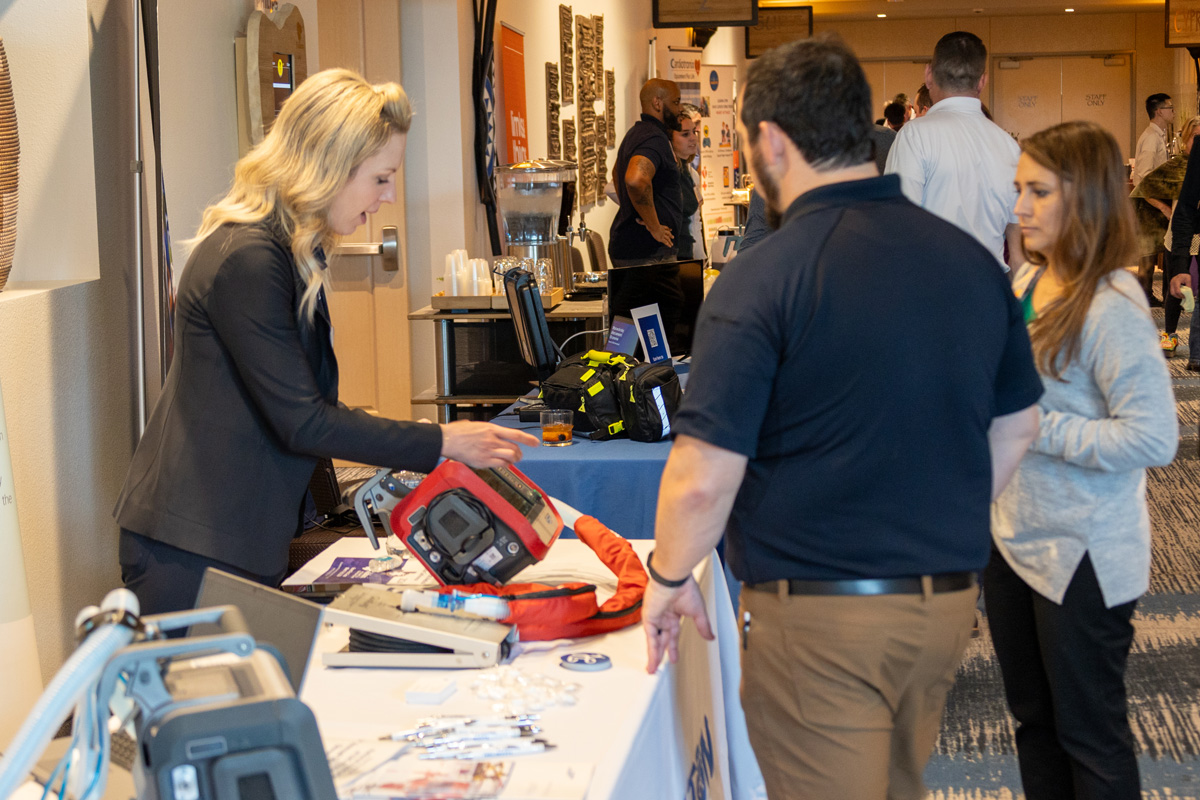
The ALD offers dental suppliers great opportunities to sponsor or exhibit at a number of events that include single day Laser Certification courses and the Annual Session. These events have both Dentists and Hygienists who are looking for more information and training using a multitude of dental lasers and wavelengths. Click the button below for more information or call us at 813-444-1011.